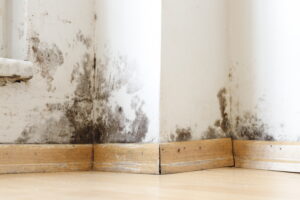
Damp and mould are more than maintenance concerns. Left untreated, they can pose serious health risks to residents and lead to significant problems for landlords and property managers. With Awaab’s Law now in effect, there are stricter requirements around how quickly certain housing hazards must be investigated and addressed.
For block managers, landlords and managing agents, understanding the legislation and taking a proactive approach to property maintenance is increasingly important.
What is Awaab’s Law?
Awaab’s Law was introduced following the tragic death of two-year-old Awaab Ishak in 2020, caused by prolonged exposure to mould in his family’s social housing home.
Coming into force on 27 October 2025, the legislation forms part of wider reforms to Housing Law in England. It establishes legally enforceable timeframes for social housing landlords to investigate and address emergency hazards and significant damp and mould problems.
Under the Government’s official guidance, social landlords must:
- Investigate emergency hazards and make the property safe within 24 hours of becoming aware of the issue.
- Investigate potential significant damp and mould hazards within 10 working days of becoming aware of them.
- Provide tenants with a written summary of the investigation findings within three working days of its completion.
- Complete relevant safety work within five working days of concluding an investigation that identifies a significant hazard.
- Arrange suitable alternative accommodation, at the landlord’s expense, where required safety work cannot be completed within the prescribed timeframe.
These deadlines represent maximum timeframes, not recommended waiting periods. Where there is an immediate risk to residents, landlords should act sooner.
Who does Awaab’s Law apply to?
Awaab’s Law currently applies to registered providers of social housing in England, including housing associations and local authority landlords. Although its specific statutory deadlines do not yet apply to private landlords, the legislation reflects increasing expectations around housing safety and maintenance standards across the rental sector.
Private landlords and managing agents must still comply with existing obligations under legislation such as the Housing Act 2004 and the Homes (Fitness for Human Habitation) Act 2018.
The scope of Awaab’s Law is also expanding. From 30 November 2026, the next phase is scheduled to cover additional significant hazards, including excess cold, excess heat, fire risks and electrical hazards, alongside the existing requirements.
For professionals managing mixed residential portfolios, understanding which responsibilities apply to each property is essential.
Why damp and mould require prompt attention
Damp and mould can develop for several reasons, including leaking pipes, damaged roofing, inadequate ventilation, condensation and problems with the building’s structure.
According to UK Government guidance on damp and mould, exposure can worsen respiratory conditions such as asthma and increase the risk of other health problems. Children, older people and individuals with existing health conditions can be particularly vulnerable.
Simply cleaning away visible mould is not always enough. Unless the underlying source of moisture is identified and resolved, the problem may return. For landlords and property managers, effective treatment means addressing both the immediate issue and its root cause.
How property managers can stay ahead
A proactive maintenance strategy is one of the most practical ways to manage damp and mould risks while supporting compliance with relevant Housing Law.
Key steps include:
- Regular property inspections: Check roofs, guttering, windows, plumbing and ventilation systems for signs of moisture ingress or deterioration.
- Prompt investigation: Take reports of damp, condensation or mould seriously and establish the cause before the problem worsens.
- Preventative maintenance: Repair leaks, maintain ventilation systems and address building defects before they contribute to more extensive damage.
- Clear communication: Keep residents informed about investigations, repairs and expected timescales.
- Accurate record keeping: Maintain records of reported concerns, inspections, contractor visits and completed remedial work.
For block managers, this may also involve coordinating repairs across communal areas, individual properties and shared building systems. A well-managed approach helps protect residents, maintain property conditions and reduce the likelihood of recurring problems.
Supporting safer, well-maintained properties
Awaab’s Law reinforces the importance of identifying housing hazards early and responding effectively. While the legislation introduces specific responsibilities for social landlords, its underlying message is relevant to everyone involved in residential property management.
At Dependable, we understand the challenges of keeping residential buildings safe, maintained and running smoothly. Our property maintenance services support landlords, block managers and managing agents with the practical upkeep of their properties, from routine maintenance to addressing unexpected repair requirements.
If you’re reviewing your approach to damp and mould prevention or need reliable support with ongoing property maintenance, our experienced team would be happy to help.
Frequently asked questions about Awaab’s Law
What is Awaab’s Law and why was it introduced?
Awaab’s Law is housing legislation introduced in England on 27 October 2025 to ensure social landlords address serious housing hazards within legally defined timeframes. It was introduced following the death of two-year-old Awaab Ishak, who suffered prolonged exposure to mould in his home. The law aims to improve housing conditions and protect tenants from preventable health and safety risks.
How quickly must landlords deal with damp and mould under Awaab’s Law?
Under Awaab’s Law, social landlords must investigate potential significant damp and mould hazards within 10 working days of becoming aware of them. Where a significant hazard is confirmed, they must complete the necessary safety work within five working days of the investigation concluding. Emergency hazards must be investigated and made safe within 24 hours. Further preventative work is also subject to specific deadlines.
Does Awaab’s Law apply to private landlords and block managers?
As of October 2026, Awaab’s Law’s specific repair deadlines apply to registered social housing providers in England. The Renters’ Rights Act 2025 provides for its extension to private rented tenancies, but further regulations are needed to establish the requirements. Private landlords and block managers must still meet their existing legal responsibilities for property safety, repairs and maintenance.
What are the main causes of damp and mould in residential properties?
Common causes include leaking pipes, roof defects, penetrating damp, condensation, inadequate ventilation and building maintenance issues. Identifying the underlying cause is essential, as removing visible mould without addressing the source of moisture may allow the problem to return.
How can property managers prevent damp and mould?
Property managers can reduce damp and mould risks through regular property inspections, prompt leak repairs, effective ventilation and preventative building maintenance. Keeping accurate records of reported problems, inspections and remedial works also supports effective property management and helps demonstrate compliance with relevant housing legislation.
Learn More about how Dependable can support your property management and maintenance requirements.